
Hi, I'm Mario Gatti. I live in Nevada. Craig "The Water Guy" Phillips asked me to share my homeowner experience with local tap water and the SoftPro ECO™ City Water Softener - Best Water Softener Systems for City Water I purchased. This is how my adventures played out. I hope this helps you in your decision.
Did you know that even "treated" city water can wreak havoc on your home's plumbing and appliances?
I certainly didn't realize the extent of the problem until I started noticing white crusty buildup on every faucet, showerhead, and glass surface in my house. Living here in Nevada, I thought hard water was just a fact of life we had to accept. That was eighteen months ago, before I discovered the SoftPro ECO water softener system.
After nearly two years of daily use, I can honestly say this system works reliably every day, just as promised. But let me take you through the entire journey—from the frustrating problems that led to my research, through the installation process, to the real-world results I'm experiencing today. If you're dealing with hard water issues like I was, this detailed review will help you understand whether the SoftPro ECO is the right solution for your home.
The Hard Water Problem That Drove Me to Find a Solution
Let me paint you a picture of what life was like before I installed the SoftPro ECO system. Every morning, I'd wake up to water spots covering our glass shower doors that seemed impossible to remove completely. Have you ever spent thirty minutes scrubbing something only to have it look dirty again within days?
That was my reality with virtually every water-using surface in our home.
The real wake-up call came when our dishwasher repair technician explained why our relatively new appliance was already showing signs of mineral buildup. He pointed to the heating element, which had developed a thick white coating of calcium and magnesium deposits. "This is what hard water does," he explained, "and it's happening throughout your entire plumbing system."
Our municipal water supply tested at 18 grains per gallon of hardness—well into the "very hard" category according to Water Quality Association standards. This level of mineral content was causing multiple problems simultaneously. Our water heater was working overtime to heat water through mineral deposits coating the elements. Our clothes felt rough and looked dingy despite using quality detergents. Even our morning coffee tasted off due to the high total dissolved solids affecting the brewing process.
The financial impact was becoming significant too. We were going through CLR and other mineral deposit cleaners at an alarming rate. Our showerheads needed replacement every few months as the spray holes became clogged with calcium buildup. The water heater's efficiency was declining, reflected in gradually increasing utility bills.
I tried various band-aid solutions before committing to a whole-house approach. Vinegar soaks helped temporarily with fixtures, but the underlying problem persisted. Bottled water for drinking was expensive and environmentally wasteful. Water-conditioning shampoos and rinse aids for the dishwasher provided minimal improvement while adding to our monthly expenses.
Research Journey: Understanding Water Softening Technology
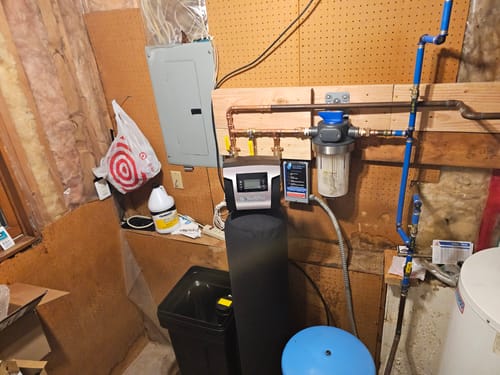
Once I committed to solving this problem properly, I dove deep into understanding how different water treatment systems actually work. The learning curve was steeper than expected, but I wanted to make an informed decision rather than just buying the first system I encountered.
Traditional salt-based ion exchange systems emerged as the most proven technology for hard water treatment. The science is straightforward: resin beads inside the tank attract calcium and magnesium ions, exchanging them for sodium ions. When the resin becomes saturated with hardness minerals, a regeneration cycle flushes them away with a brine solution, recharging the system for continued operation.
I also investigated salt-free water conditioners, template-assisted crystallization systems, and electromagnetic water treatment devices. While these alternatives avoid adding sodium to the water supply, the consensus among water treatment professionals was that they don't actually remove hardness minerals—they attempt to change their behavior to reduce scaling.
For our situation with 18 GPG hardness, I needed genuine mineral removal, not just conditioning. The SoftPro ECO caught my attention because it combined proven ion exchange technology with several efficiency features that addressed my specific concerns about ongoing operational costs.
The system's upflow regeneration design intrigued me because it uses only the amount of salt and water necessary for the actual resin cleaning required. Traditional downflow systems often over-regenerate, wasting salt and increasing discharge volumes. The ECO's demand-initiated regeneration means the system only cycles when needed based on actual water usage, not arbitrary time schedules.
Sizing calculations indicated I needed approximately 48,000 grain capacity for our household of four with moderate to high water usage. The SoftPro ECO 48k model provided exactly that capacity while fitting in our utility room space constraints.

Unboxing and Initial Impressions
The SoftPro ECO arrived via freight delivery on a pallet, which immediately conveyed the substantial nature of this investment. The packaging was industrial-grade, with multiple layers of protective wrapping and corner guards that kept everything pristine during shipping.
My first impression upon unpacking was the solid construction quality. The mineral tank felt substantial—not the lightweight plastic I expected, but thick-walled fiberglass that conveyed durability. The brine tank was equally robust, with a heavy-duty lid and quality salt grid platform inside.
The control head appeared more sophisticated than typical residential water softeners I'd seen. Instead of basic mechanical timers, the ECO featured an LCD display showing system status, remaining capacity, and regeneration scheduling. The interface looked intuitive, with clearly labeled buttons for programming and manual operation.
All components were included as promised: bypass valve assembly, drain line fittings, brine tank overflow connector, and comprehensive installation hardware. The instruction manual was thorough—perhaps overly so—but I appreciated having detailed technical specifications and troubleshooting guides rather than just basic setup diagrams.
One pleasant surprise was the compact footprint relative to capacity. I'd measured our utility room space carefully, and the ECO fit comfortably with room for maintenance access around the brine tank. The neutral beige color scheme looked professional without being institutional.
Installation Experience and Setup Process

I opted for professional installation despite having reasonable DIY plumbing skills. Given the investment involved and the importance of proper initial setup, I wanted everything done correctly from day one. The certified softprowatersystems.com installer I hired had specific experience with SoftPro systems, which proved valuable during the process.
Pre-installation preparation involved shutting off the main water supply and draining the lines downstream of where we'd install the bypass valve. Our home's plumbing layout required adding the softener to the main line after the pressure tank but before the water heater—standard configuration for whole-house treatment.
The actual installation took approximately four hours, including time for careful pipe measurements and professional-grade soldering of the bypass connections. The installer emphasized the importance of proper drain line routing, ensuring adequate air gap and fall for efficient regeneration discharge.
Initial system startup involved several steps I wouldn't have thought to do myself. The resin bed required proper backwashing to remove shipping debris and settle the media correctly. The control head programming needed adjustment for our specific water hardness level and household usage patterns.
We filled the brine tank with high-purity salt pellets—the installer recommended against using rock salt or solar salt due to insoluble impurities that could cause control valve problems over time. The initial regeneration cycle took about ninety minutes, during which we had no water service.
Have you ever been nervous about whether a major home improvement will actually work as promised?
I certainly was during those first few hours. But by evening, we had soft water flowing throughout the house, and the difference was immediately apparent.
Feature Analysis: What Makes the ECO System Different
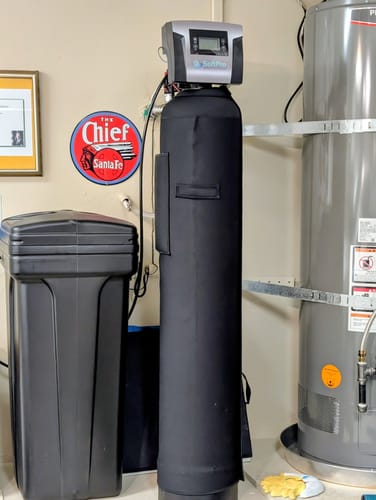
After eighteen months of operation, I can provide detailed insight into how the SoftPro ECO's key features perform in real-world conditions. Each design element serves a specific purpose that becomes apparent through extended use.
Upflow Regeneration Technology
The upflow regeneration process has proven more efficient than I initially expected. Traditional downflow systems push brine solution through the resin bed in the same direction as service water flow, which can create channeling and incomplete regeneration. The ECO's upflow design forces brine through the most depleted resin first, ensuring thorough cleaning with minimal salt waste.
I monitor salt usage carefully, and we're averaging 6.5 pounds per regeneration cycle—significantly less than the 8-12 pounds typical of conventional systems. Over eighteen months, this efficiency has saved approximately 180 pounds of salt, reducing both costs and environmental impact.
Demand-Initiated Regeneration Control
The microprocessor-controlled regeneration scheduling adapts to our actual water usage patterns rather than operating on fixed timers. The system tracks water flow and calculates remaining capacity in real-time, initiating regeneration only when needed.
This demand-based approach has eliminated the wasteful over-regeneration I experienced with our previous timer-based system. During vacation periods when water usage drops, the ECO automatically extends cycles. Conversely, during heavy usage periods like holiday gatherings, it regenerates more frequently to maintain consistent performance.
High-Capacity Ion Exchange Resin
The ECO utilizes premium-grade resin with 48,000 grain capacity in our model size. This high-quality media has maintained excellent performance throughout our ownership period, with no signs of degradation or reduced efficiency.
The resin bed effectively reduces our incoming hardness from 18 GPG to less than 1 GPG consistently. I test monthly using digital TDS meters and hardness test strips, and results remain stable. The resin's resistance to chlorine damage has been particularly important given our city water's 2.5 PPM chlorine residual.
Advanced Flow Control Design
The ECO maintains excellent flow rates even during peak demand periods. With four family members getting ready simultaneously on busy mornings, we maintain 12-15 GPM flow at good pressure. The internal distribution system prevents resin bed channeling that could reduce contact time and treatment effectiveness.
The bypass valve integration allows easy system isolation for maintenance without disrupting household water supply—a feature I've appreciated during routine service intervals.
Performance Testing: Measuring Real-World Results
Quantifying the SoftPro ECO's performance has been important for validating the investment and understanding the system's ongoing effectiveness. I've maintained detailed records of water quality measurements, operational parameters, and household observations.
Water Quality Measurements
Monthly testing with calibrated instruments shows consistent hardness reduction from our municipal supply's 18 GPG to post-treatment levels below 1 GPG. Total dissolved solids drop from approximately 420 PPM to 380 PPM, reflecting the ion exchange process removing calcium and magnesium while adding minimal sodium.
The treated water's soap test results demonstrate dramatic improvement in cleaning effectiveness. Prior to installation, achieving adequate lather required excessive soap quantities due to hardness minerals interfering with detergent action. Post-treatment water produces rich lather with minimal soap input.
Iron levels in our city water occasionally spike to 0.8 PPM during main flushing periods. The ECO's resin effectively removes this iron along with hardness minerals, preventing the metallic taste and staining issues we experienced previously.
System Performance Monitoring
The control head's diagnostic display provides valuable operational data. Regeneration frequency has stabilized at every 8-10 days with our current usage patterns—approximately 2,400 gallons of treated water per cycle. This matches the theoretical calculations based on resin capacity and household consumption.
Salt efficiency remains excellent at roughly 2.7 pounds of salt per 1,000 grains of hardness removed. Industry standards suggest 6-8 pounds per 1,000 grains for conventional systems, so the ECO's efficiency represents significant improvement.
Water usage during regeneration averages 38 gallons per cycle, including backwash, brine draw, and final rinse phases. This relatively low consumption minimizes impact on our well-water neighbors while ensuring thorough resin cleaning.
Appliance and Fixture Impact
The most dramatic improvements appear in appliances and fixtures throughout the house. Our dishwasher now produces spotless glassware without rinse aids or special detergents. The coffee maker no longer requires monthly descaling treatments, and brewing quality has improved noticeably.
Showerheads maintain full spray patterns without mineral clogging. Our glass shower doors stay cleaner with simple squeegee maintenance rather than requiring aggressive chemical cleaning. Faucet aerators haven't needed replacement since installation—previously a quarterly necessity.
Daily Life Impact: Living with Soft Water
The transition to soft water has created improvements throughout our household that extend far beyond just eliminating mineral deposits. These quality-of-life enhancements have become particularly apparent over extended use.
Personal Care and Comfort
Showering with soft water feels dramatically different from day one. Soap lathers more readily and rinses completely, leaving skin feeling clean without residual film. My wife noticed her hair requires less conditioner and maintains better texture between washings.
The elimination of soap scum buildup in tubs and showers has transformed bathroom cleaning from a weekly ordeal to simple maintenance. A quick wipe-down prevents buildup that previously required aggressive scrubbing with specialized cleaners.
Laundry and Cleaning Improvements
Our clothing washer performance has improved substantially with soft water. Fabrics feel softer and maintain color brightness longer. We've reduced detergent usage by approximately one-third while achieving better cleaning results.
White clothing no longer develops the grayish tint that hard water minerals create over time. Towels remain fluffy and absorbent rather than becoming stiff and scratchy. The washing machine itself shows no signs of mineral buildup that previously required monthly cleaning cycles.
Kitchen and Cooking Applications
Cooking with soft water has produced subtle but noticeable improvements in food preparation. Rice and pasta cook more evenly, and vegetables retain better color and texture. Our morning coffee tastes cleaner and more flavorful without mineral interference.
Dishwashing by hand requires significantly less detergent for effective cleaning. Glassware air-dries without water spots, and stainless steel maintains its appearance without constant polishing.
Household Maintenance Reduction
The most appreciated benefit has been the dramatic reduction in mineral-related maintenance throughout the house. Faucets, showerheads, and appliances maintain their performance without constant attention to scale buildup.
Our water heater operates more efficiently without mineral deposits reducing heat transfer. The plumbing system flows freely without gradual restriction from scale accumulation. These improvements should extend equipment lifespan significantly.
Honest Assessment: Limitations and Considerations
While the SoftPro ECO has delivered excellent results, eighteen months of ownership has revealed some limitations and considerations that potential buyers should understand before making this investment.
Ongoing Maintenance Requirements
Salt-based water softening requires regular attention that some homeowners might find burdensome. The brine tank needs salt refills every 6-8 weeks, and I've learned to monitor levels carefully to prevent system shutdown during regeneration cycles.
The control head occasionally requires manual adjustment if power outages reset the programming. While not difficult, it does require understanding the interface and remembering your specific settings.
Annual service inspections help maintain peak performance, but professional service calls add to the total cost of ownership. DIY maintenance is possible but requires comfort with plumbing connections and system diagnostics.
Space and Installation Considerations
The ECO system requires significant floor space—approximately 4 square feet including clearance for maintenance access. Homes without dedicated utility rooms might struggle to accommodate the installation discretely.
Professional installation costs range from $300-600 depending on plumbing complexity and local labor rates. DIY installation is possible for experienced homeowners but requires confidence with plumbing modifications and electrical connections.
Water Quality and Taste Considerations
Ion exchange water softening adds sodium to the treated water supply—typically 25-50 mg per 8-ounce glass depending on original hardness levels. While not significant for most people, those on sodium-restricted diets should consider this addition.
Some family members initially noticed a slight taste difference in the soft water, particularly in coffee and tea preparation. This adjustment period lasted approximately two weeks as taste preferences adapted to the mineral content change.
Operational Costs and Efficiency
While salt usage is efficient compared to conventional systems, ongoing consumable costs still average $8-12 monthly for salt and periodic resin cleaning products. Over the system's expected 15-20 year lifespan, these costs compound significantly.
Regeneration cycles increase wastewater discharge and water usage—important considerations for homes with septic systems or water usage restrictions during drought periods.