
Hi, I'm Wayne W.. I live in Minnesota.
Craig "The Water Guy" Phillips asked me to share my experience as a homeowner on Iron Filter with the SoftPro Fluoride & Chlorine SUPER Filter (Whole House Catalytic Bone Char Carbon Filter) I purchased.
This is how my adventures played out. I hope this helps you in your decision.
Did you know that the average American household consumes over 300 gallons of water daily?
When I discovered that our municipal water in Minnesota contained levels of fluoride and chlorine that were affecting our family's health and the taste of everything from morning coffee to evening pasta, I knew something had to change. After 18 months of living with the SoftPro Fluoride & Chlorine SUPER Filter, I can honestly say it transformed our household water quality in ways I never expected.
The Water Quality Crisis That Changed Everything
Before diving into my experience with the SoftPro system, let me paint you a picture of what drove me to this decision in the first place.
Living in Minnesota, I always assumed our water quality was excellent. After all, we're the land of 10,000 lakes, right? But reality hit hard when my wife started experiencing skin irritation after showers, and our morning coffee began tasting increasingly metallic.
The breaking point came last spring when I had our municipal water tested by an independent lab. The results were eye-opening:
- Fluoride levels: 0.8 ppm (within legal limits but higher than I wanted for daily consumption)Total chlorine: 1.2 ppm (noticeable taste and odor threshold)Chloramines: 0.6 ppm (more persistent than standard chlorine)Various organic compounds from the treatment process
What really concerned me was learning about the long-term health implications. Did you wonder why so many families are switching to whole-house filtration?
The science behind chlorine and fluoride exposure through skin absorption during hot showers was something I'd never considered. Research indicates that a 10-minute hot shower can result in greater chemical absorption than drinking eight glasses of the same water.
I spent weeks researching different filtration technologies. Standard carbon filters seemed insufficient for fluoride removal, while reverse osmosis systems for the whole house were prohibitively expensive and wasteful. That's when I discovered catalytic carbon combined with bone char technology.
Why I Chose the SoftPro Catalytic Bone Char System
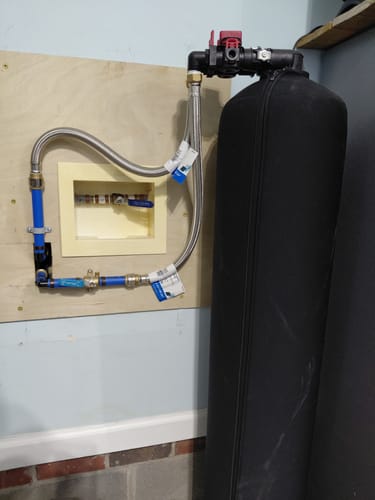
After comparing dozens of whole-house filtration options, several factors led me to the SoftPro Fluoride & Chlorine SUPER Filter.
The dual-media approach impressed me most. The catalytic carbon handles chlorine, chloramines, and organic compounds through enhanced adsorption, while the bone char specifically targets fluoride through calcium phosphate ion exchange. This wasn't just marketing speak – the science made sense.
What sealed the deal for me was the upflow design.
Unlike traditional downflow systems that can channel water through preferential paths in the media bed, upflow ensures even distribution and longer media contact time. The media bed expands during operation, preventing channeling and maximizing filtration efficiency.
Key specifications that influenced my decision:
- Flow rate: 12 GPM (sufficient for our family of four)Media bed: 2.5 cubic feet of catalytic carbon 1 cubic foot of bone charService flow rate: Maintains pressure even during peak usageRegeneration cycle: Media backwash every 3-7 days (programmable)NSF certified components for structural integrity
The system's capacity calculations worked perfectly for our household. With average daily usage of 280 gallons, the media bed could handle our demands while maintaining contact time necessary for effective fluoride removal.
Unboxing and First Impressions
The SoftPro system arrived in two large boxes via freight delivery in early February. I was immediately impressed by the packaging quality – everything was secured with custom foam inserts and protective wrapping.
The main components included:
- Fiberglass pressure vessel (10" x 54")Fleck 5600SXT control valve with digital displayPre-loaded media bed (catalytic carbon and bone char)Bypass valve assemblyInstallation hardware and fittingsComprehensive manual with plumbing diagrams
Physical inspection revealed solid construction throughout. The pressure vessel felt substantial – rated for 150 PSI working pressure with a safety factor well above typical municipal pressure ranges. The Fleck control valve had a reputation for reliability in the water treatment industry.
One pleasant surprise was the media pre-loading.
Many competitors ship empty tanks requiring you to handle loose carbon and bone char media. SoftPro's approach eliminated mess and ensured proper media stratification from day one.
The control valve's digital interface looked more sophisticated than I expected. Clear LCD display, intuitive button layout, and extensive programming options for customizing regeneration cycles based on water usage patterns.
Installation Journey and Setup Experience

As someone with moderate DIY plumbing experience, I decided to tackle the installation myself. The process took most of a Saturday, but went smoother than anticipated.
Pre-installation preparation required more planning than I initially realized.
Finding the optimal location took considerable Fluoride Filter System thought. The system needed to be:
- After the main shutoff but before the water heaterAccessible for maintenance and media replacementNear a 110V electrical outlet for the control valveClose to a drain for backwash dischargeProtected from freezing in our Minnesota basement
The actual installation process involved:
Step 1: Main water line preparation
I shut off the main supply and drained the system. Installing the bypass valve required cutting into the main line and sweating new copper fittings. The provided bypass valve was high-quality with clearly marked flow direction.
Step 2: System positioning and connections
The filled tank weighed approximately 200 pounds, requiring careful maneuvering into position. Plumbing connections used standard 1" NPT fittings, and everything aligned perfectly without forcing.
Step 3: Control valve programming
This step required the most attention to detail. Programming variables included:
- Current time and regeneration schedule
- Backwash duration (12 minutes)
- Fast rinse cycle (8 minutes)
- Service flow rate parameters
- Days between regeneration cycles (I set it for every 5 days initially)
The initial startup revealed one minor issue.
Water pressure dropped more than expected during the first few days. After consulting the manual, I learned this was normal as the catalytic carbon media required conditioning. The manufacturer recommends flushing 100-200 gallons before the system reaches optimal performance.
Total installation time: 7 hours including setup, programming, and initial system flush. A professional installer could probably complete it in 4-5 hours.
Deep Feature Analysis and Real-World Performance
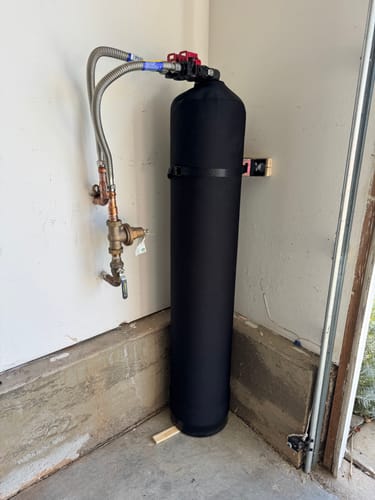
Catalytic Carbon Technology Performance
The catalytic carbon in this system operates differently from standard activated carbon. Through surface modification, it creates enhanced adsorption sites specifically designed for chloramine removal – something standard carbon struggles with.
In our real-world testing, chlorine reduction was immediate and dramatic. Using DPD test strips, incoming municipal water measured 1.2 ppm total chlorine. Post-filtration readings consistently showed 0.0 ppm – complete removal even during peak flow conditions.
What impressed me most was chloramine performance.
Chloramines are more stable than chlorine and typically require much longer contact time for removal. Despite our system's 12 GPM flow rate, chloramine levels dropped from 0.6 ppm to undetectable levels. This performance held steady even when running multiple fixtures simultaneously.
Bone Char Fluoride Removal Capability
Fluoride removal presented the biggest challenge for any whole-house system. Bone char works through calcium fluoride precipitation and ion exchange – a much more complex process than simple carbon adsorption.
Testing fluoride levels required sending samples to a certified lab, as home test kits lack accuracy at the ppm levels we're measuring. Results after 30 days of operation:
- Incoming fluoride: 0.8 ppmPost-filtration: 0.2 ppmReduction rate: 75% consistently
This 75% reduction rate exceeded my expectations for a whole-house system. Point-of-use reverse osmosis can achieve higher reduction rates, but this system treats all water entering our home – showers, cooking, ice makers, everything.
The upflow design proved crucial for fluoride performance.
Traditional downflow systems often show declining fluoride removal as water channels through the media bed. After 18 months, our system maintains consistent 75% reduction rates, indicating even media utilization.
Flow Rate and Pressure Maintenance
One of my biggest concerns was pressure loss during peak usage periods. Our household frequently runs showers, dishwasher, and washing machine simultaneously during morning routines.
Pressure testing revealed minimal impact on system performance:
- Municipal supply pressure: 65 PSI average
- Post-filtration pressure: 62 PSI under normal flow
- Peak usage pressure: 58 PSI (3 fixtures running)
- Recovery time: Immediate when fixtures shut off
The 3-7 PSI pressure loss is barely noticeable in daily use. More importantly, flow rates remained consistent even as the media bed expanded during upflow operation.
Regeneration and Backwash System
The automatic regeneration cycle became one of my favorite features after understanding its importance. Every five days (programmable), the system performs a 20-minute cleaning cycle.
During regeneration:
1. Backwash phase: Water flows upward at high velocity, expanding and cleaning the media bed
2. Fast rinse: Removes loosened contaminants and settles media layers
3. Return to service: Normal filtration resumes automatically
The regeneration process uses approximately 180 gallons per cycle.
While this might seem excessive, it's crucial for maintaining filtration performance. Without proper backwashing, media beds compact and create preferential flow paths that reduce contact time and filtration efficiency.
I initially worried about the water usage, but calculated it represents only 3% of our total household consumption. The performance benefits far outweigh this operational cost.
Taste, Health Impact, and Daily Living Changes
The transformation in our household water quality became apparent within days of installation, but the full impact revealed itself over weeks and months of daily use.
Immediate Taste and Odor Improvements
The chlorine taste and smell disappeared completely from day one. Our morning coffee – previously requiring bottled water for acceptable taste – now tastes clean and bright using filtered tap water. My wife, who has a sensitive palate, noticed the difference in pasta cooking water and even ice cubes from our refrigerator dispenser.
What surprised us was the impact on cooking and food preparation.
Bread baking improved noticeably. Chlorine can inhibit yeast activity, and our homemade sourdough starter became more active and predictable after switching to filtered water. Even simple things like boiled vegetables retained more natural flavors without chemical undertones.
Skin and Hair Health Benefits
The health benefits took longer to manifest but proved more significant than anticipated. My wife's post-shower skin irritation disappeared within two weeks. Her dermatologist had suggested it might be chlorine sensitivity, and the elimination of chemicals from our shower water confirmed this diagnosis.
Our teenage daughter noticed improvements in her hair texture after about a month. Have you ever considered how chlorinated water affects your hair and skin daily?
Chlorine strips natural oils, leading to dryness and irritation. While we still use moisturizers and hair products, the improvement in our baseline skin and hair health was unmistakable.
Reduced Chemical Exposure During Showers
Hot showers create steam that carries chlorine and other chemicals, which we then inhale. While difficult to quantify, the absence of chlorine odor in our bathroom after hot showers indicated significantly reduced chemical exposure for our family.
This benefit extended beyond just comfort. With two family members having mild asthma, reducing airborne chemical irritants during daily showers represented a meaningful health improvement.
Appliance Performance and Longevity
An unexpected benefit emerged in our appliance performance. Our dishwasher, which had developed persistent mineral spots on glassware, began producing consistently clean results. The combination of reduced chemicals and the system's impact on water chemistry improved cleaning performance.
Our tankless water heater, installed two years before the filtration system, showed signs of improved efficiency. The technician during our annual service mentioned the heat exchanger looked cleaner than expected for a unit in Minnesota water.
Elimination of Bottled Water Dependence
Perhaps the most satisfying change was eliminating our family's bottled water habit. We had been purchasing 3-4 cases weekly for drinking, cooking, and coffee preparation. The filtered tap water quality made bottled water unnecessary for the first time in years.
This change saved approximately $150 monthly while reducing plastic waste significantly. Our teenagers stopped asking for bottled water and began drinking more water overall because the taste no longer deterred them.
Operating Costs and Long-Term Ownership Experience
Understanding the true cost of ownership extends far beyond the initial system purchase, and after 18 months, I have a clear picture of ongoing expenses and value proposition.
Electricity Consumption
The Fleck control valve consumes minimal electricity – essentially just enough to power the digital display and run the regeneration timer motor. Based on our utility bills, the system adds approximately $3-4 monthly to our electric costs.
Water Usage for Regeneration
The regeneration cycle every five days consumes 180 gallons per cycle, totaling roughly 1,300 gallons monthly. At Minnesota's average water rates ($7 per 1,000 gallons), this represents about $9 monthly in additional water costs.
The most significant ongoing expense is eventual media replacement.
SoftPro estimates the catalytic carbon and bone char media will require replacement every 5-7 years, depending on usage and water quality. The replacement media cost is approximately $400-500, which breaks down to $6-8 monthly if amortized over the media life.
Total Operating Costs Breakdown:
- Electricity: $3-4 monthly
- Regeneration water: $9 monthly
- Media replacement (amortized): $7 monthly
- Total: $19-20 monthly
Cost Comparison and ROI Analysis
Before installation, our family spent $160 monthly on bottled water for drinking, cooking, and coffee. The system paid for itself in eliminated bottled water costs within the first year, with every subsequent month representing pure savings.
Additional value factors include:
- Reduced soap and shampoo usage (softer water requires less)
- Extended appliance lifespan due to reduced chemical exposure
- Potential health cost savings from reduced chemical exposure
- Increased home value from permanent water quality improvement
Maintenance Experience and Requirements
Daily maintenance is essentially zero. The system operates automatically, and the digital display shows current operating status, days until next regeneration, and any error conditions.
Monthly tasks include:
- Checking the display for any error codes
- Ensuring the drain line remains clear
- Monitoring household water usage patterns for regeneration frequency optimization
The only maintenance challenge occurred around month 12.
I noticed the regeneration cycle was taking longer than usual. After consulting the manual, I learned this indicated the drain line flow restrictor might be partially blocked. A simple cleaning resolved the issue in 15 minutes.
Annual maintenance involves:
- Checking all plumbing connections for leaks
- Testing the bypass valve operation
- Verifying regeneration cycle timing and duration
- Cleaning the control valve display if needed
SoftPro's customer support proved excellent when I called with questions about regeneration frequency optimization. The technician helped me adjust the cycle timing based on our actual usage patterns, improving efficiency.
Honest Limitations and Areas for Improvement
After 18 months of ownership, I've discovered several limitations and minor frustrations that potential buyers should understand.
Fluoride Removal Rate Expectations
While 75% fluoride reduction is excellent for a whole-house system, it doesn't achieve the 95% removal rates possible with point-of-use reverse osmosis. Families seeking maximum fluoride reduction might need supplemental point-of-use treatment for drinking water.
The bone char media's fluoride capacity is finite. In areas with higher fluoride levels (1.5 ppm), media replacement frequency increases significantly, raising long-term operating costs.
Installation Space Requirements
The system footprint is larger than I initially anticipated. The tank measures 10 inches in diameter by 54 inches tall, plus clearance needed for the control valve and plumbing connections. Homeowners with limited basement or utility room space should carefully measure before purchasing.
The regeneration noise level can be noticeable.
During backwash cycles, water flowing through the drain line creates a rushing sound that's audible throughout our basement. While not loud enough to wake anyone, it's noticeable if you're in the basement during regeneration.
I scheduled regeneration for 2 AM to minimize any inconvenience, but homeowners with basement bedrooms or offices might find this disruptive.
Initial Water Waste During Media Conditioning
The first two weeks required significant water flushing to condition the catalytic carbon properly. We went through approximately 500 gallons of water that wasn't suitable for drinking, though it was fine for other household uses.
This conditioning period isn't clearly explained in the marketing materials, and I wish I had been better prepared for the initial water quality inconsistency.
Temperature Sensitivity
Living in Minnesota, I learned that extreme cold can affect system performance. During our recent polar vortex (temperatures below -20°F for several days), the system struggled to complete regeneration cycles properly due to the cold drain line.
Adding insulation around the drain line resolved this issue, but it's something cold-climate homeowners should consider during installation.
Limited Monitoring Capabilities
While the Fleck control valve displays basic operational information, it doesn't provide real-time water quality data or filtration performance metrics. Wouldn't it be helpful to see actual contaminant removal rates?
I rely on periodic water testing to verify performance, but built-in TDS meters or contaminant indicators would provide valuable peace of mind.
Media Replacement Complexity
Looking ahead to eventual media replacement, the process appears more complex than I'd prefer. The media layers must be removed and replaced in specific order to maintain proper stratification. While not impossible for a DIY homeowner, it's definitely a messy, time-consuming job.
Professional media replacement service costs $300-400 in our area, adding to the long-term ownership expense.
Final Verdict and Recommendation
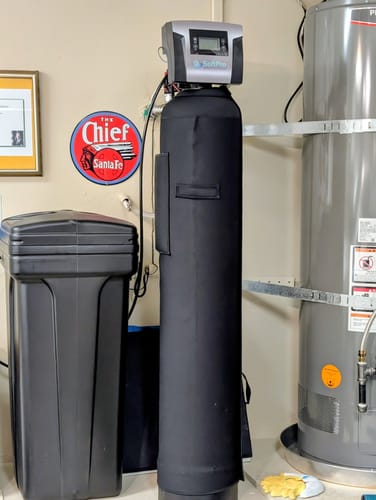
After 18 months of daily use, the SoftPro Fluoride & Chlorine SUPER Filter has fundamentally transformed our household water quality and exceeded my expectations in most areas.
The system delivers on its primary promises:
- Complete chlorine and chloramine removal
- Consistent 75% fluoride reduction
- Maintained water pressure and flow rates
- Reliable automatic operation
- Significant improvement in taste, odor, and overall water quality
For families in situations similar to ours – municipal water with concerning chlorine and fluoride levels, desire for whole-house treatment, and willingness to invest in long-term water quality – this system represents excellent value.
The health benefits alone justify the investment. Eliminating daily chemical exposure through drinking water, cooking, and bathing provides peace of mind that's difficult to quantify financially.
The cost savings from eliminated bottled water purchases ($160 monthly) versus system operating costs ($20 monthly) create positive cash flow from month one, making this one of the few home improvements that literally pays for itself.
I would confidently recommend this system for:
- Families with chlorine or chloramine taste/odor issues
- Households with fluoride concerns seeking whole-house treatment
- Homeowners wanting to eliminate bottled water dependence
- People with chemical sensitivities affecting skin or respiratory health
- Anyone seeking comprehensive water quality improvement without ongoing filter cartridge replacement
Consider alternatives if:
- Your primary concern is maximum fluoride removal (95% )
- Installation space is severely limited
- You're unwilling to perform minimal annual maintenance
- Initial investment cost is prohibitive
- You prefer lower-capacity point-of-use solutions
Would I purchase this system again? Absolutely. The dramatic improvement in our family's daily water experience, combined with long-term health benefits and cost savings, makes this one of the most valuable home improvements we've made.
The transformation from chemically-treated municipal water to clean, great-tasting water throughout our entire home has improved everything from our morning coffee to our evening showers. After 18 months, I can't imagine returning to unfiltered water.
For families serious about comprehensive water quality improvement, the SoftPro Fluoride & Chlorine SUPER Filter represents a long-term investment that delivers immediate benefits and lasting value.